The Future of Coaching Businesses in India – Professionalisation, ICF Standards, AI Integration, and Emerging Business Models
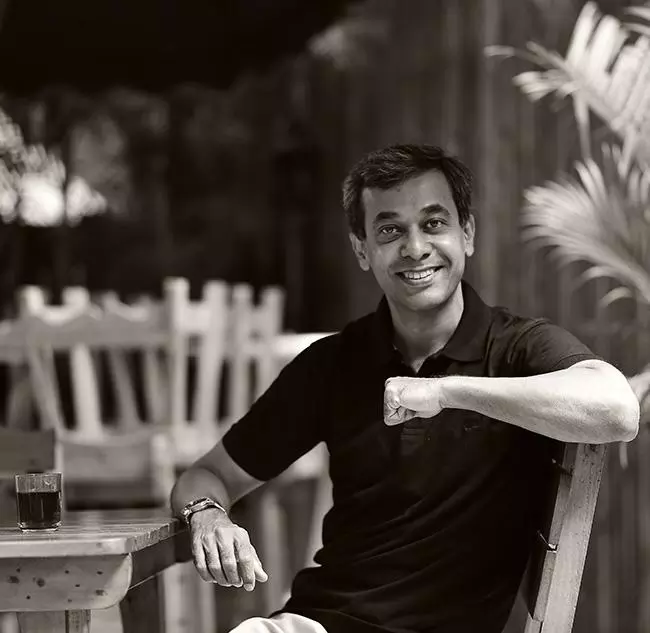
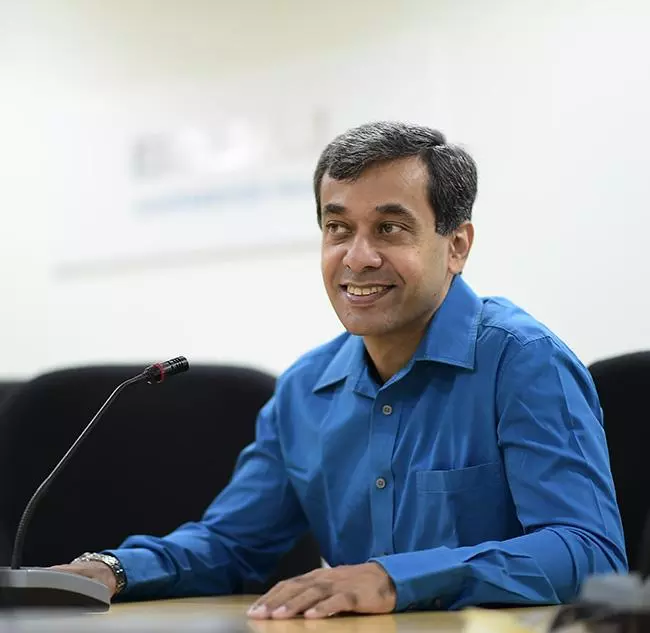
Author: Anil Dagia
Year: 2026
Document type: Conceptual Position Paper
Download full paper (PDF)
Abstract
The coaching industry in India is undergoing a structural transformation. What was once a loosely defined, personality-driven practice is increasingly evolving into a professional, standards-based, and system-oriented field. This position paper examines the future of coaching businesses in India through four intersecting dimensions: professionalisation and credentialing (with reference to International Coaching Federation standards), the integration of artificial intelligence into coaching practice and business operations, the emergence of scalable coaching business models, and the globalisation of Indian coaching services. Drawing on practitioner observation, applied coaching contexts, and industry trends, this paper argues that sustainable coaching businesses will be defined less by individual charisma or isolated techniques and more by integrated competence, ethical standards, technological leverage, and coherent business architecture.
1. Introduction: Coaching at an Inflection Point in India
Over the past two decades, coaching in India has expanded rapidly across life coaching, executive coaching, leadership development, and business coaching domains. Major metropolitan centres such as Mumbai, Delhi, Bengaluru, Pune, Hyderabad, and Chennai have seen significant growth in coaching activity, alongside increasing international engagement.
Despite this expansion, the industry has lacked consistent professional definition. Training pathways, ethical standards, and business models have varied widely, resulting in uneven quality and credibility. The industry is now approaching an inflection point where growth alone is no longer sufficient; structural maturity has become essential.
2. From Personality-Driven Practice to Professional Discipline
Early coaching businesses in India often relied on personal branding, informal referrals, and individual reputation. While effective in limited contexts, this model is inherently fragile and difficult to scale.
Contemporary coaching businesses are increasingly characterised by:
- Defined coaching competencies
- Ethical boundaries and contracting
- Repeatable delivery frameworks
- Predictable client acquisition systems
- Clear positioning and pricing logic
This transition reflects a broader shift from coaching as an informal helping activity to coaching as a professional discipline with shared standards and accountability.
3. Professionalisation and the Role of ICF Standards
The International Coaching Federation (ICF) has played a central role in shaping professional coaching globally. Its contribution lies not in methodology, but in establishing a competency-based, ethical framework for coaching practice.
ICF standards emphasise:
- Ethical conduct and professional responsibility
- Observable coaching competencies
- Client autonomy and informed consent
- Ongoing professional development
Within the Indian context, ICF-aligned coaching is increasingly associated with organisational credibility, corporate engagement, and readiness for global client work. While certification alone does not guarantee coaching excellence, it provides a common professional language and trust baseline in an otherwise fragmented market.
4. Artificial Intelligence and the Transformation of Coaching Businesses
The rise of artificial intelligence has introduced both concern and opportunity within the coaching profession. It is essential to distinguish between coaching as a human relational process and coaching as a business operation.
AI is unlikely to replace core human coaching functions such as presence, empathy, ethical judgment, and identity-level change. However, AI is already transforming operational aspects of coaching businesses, including:
- Client onboarding and assessment
- Session documentation and follow-up
- Learning content delivery
- Marketing and lead nurturing systems
This has led to the emergence of AI-assisted coaching models, where technology supports scale and consistency while human coaches focus on depth and transformation. Future coaching businesses will increasingly be evaluated on how intelligently they integrate technology without compromising ethical practice.
5. Coaching Business Models and Structural Sustainability
Historically, many coaches operated without explicit business models, relying primarily on one-to-one engagements and referrals. Such models lack predictability and are vulnerable to market fluctuations.
Emerging coaching businesses in India are adopting more structured architectures, including:
- Premium individual coaching engagements
- Group coaching programs
- Hybrid digital and live delivery formats
- Enterprise and leadership development contracts
- Membership-based learning ecosystems
Sustainability in coaching businesses is increasingly determined by system design rather than technique selection.
6. Integration of Coaching, Behavioural Change, and Emotional Intelligence
Clients seek outcomes rather than methodologies. As a result, effective coaching practice increasingly integrates multiple disciplines, including professional coaching skills, behavioural change frameworks, emotional intelligence development, and somatic awareness.
This integrative orientation reflects a shift away from technique-centric coaching toward capability-driven practice. Coaches who can operate across cognitive, emotional, and behavioural domains are better positioned to support sustainable change in complex human systems.
7. Globalisation of Indian Coaching Practices
Indian coaches are increasingly serving clients across the United States, United Kingdom, Europe, Middle East, and Asia-Pacific regions. This globalisation raises expectations around professional standards, communication norms, ethical accountability, and delivery quality.
Coaching businesses that align with international professional expectations while retaining contextual sensitivity are likely to experience greater longevity and influence.
8. Conclusion
The future of coaching businesses in India will not be defined by marketing intensity or certification accumulation alone. It will be shaped by the convergence of professional standards, integrated human development frameworks, intelligent use of technology, and coherent business systems.
As the industry matures, coaches who treat coaching as a profession—rather than a shortcut career—will play a defining role in shaping its credibility, impact, and sustainability.
Author Note
This position paper reflects practitioner-led, non-scientific, applied analysis based on professional coaching practice, training design, and industry observation. It is intended to contribute to ongoing dialogue on the professionalisation of coaching and the structural evolution of coaching businesses in India and globally.
The full academic-style paper will be made available as a downloadable PDF and linked to its corresponding Academia.edu publication.